I was in a call with a prospect yesterday. Other side was walking us through their front office & back office grunt work. All of a sudden they jumped into pricing conversation. Sameer Goel in his calm demeanour deflected the price query and steered the conversation back to their pain points.
Post the call I was wondering if I were in the buyer's shoes what's the best framing to ask a pricing question to an AI vendor.
For the nth time I returned to Ramesh May's note specifically the part "What buying an outcome looks like."
His note is targeted towards buyers of AI. He recommends buyer should be asking themselves: are they buying a tool or an outcome?
Sounds like the same thing said differently? It's not. When you buy a tool, the burden of making it work stays with your team. When you buy an outcome, the burden shifts to whoever sold it to you. They have to understand your systems, your rules, your edge cases. They have to make it work against your actual data, not just show a fancy demo. And they have to prove it produces the right answer before anyone calls it done.
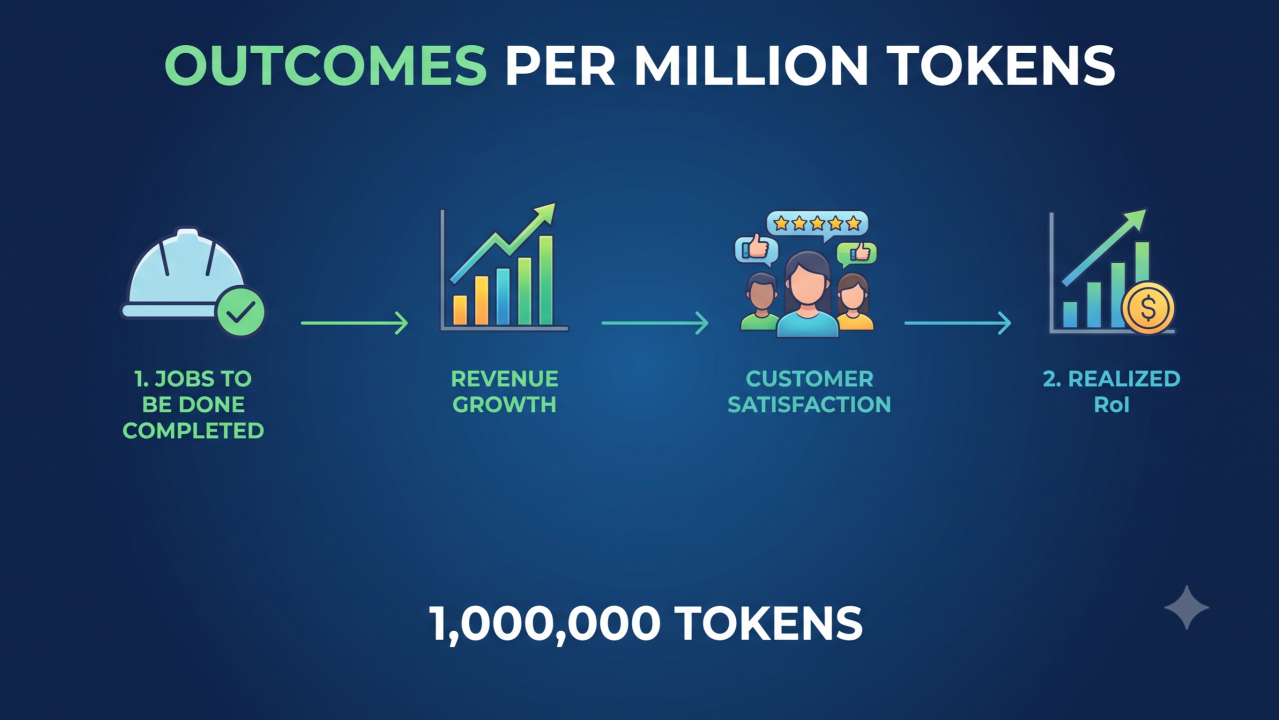
We need a simple but effective way to judge an AI vendor: Outcome per million tokens
I searched through the transcripts from our previous sales calls, identified a bunch of grunt work from the transcripts, and assigned a measurable dimension to the work items. Even added a rubric to measure success contrasting "before: failure modes" and "after: outcomes"
Listing six of them here, would love to hear more of them from you:
1. How long to produce an accurate invoice?
before: failure modes
manual billing, invoice errors, fee drift, slow recon
after: outcomes
billing: auto, invoices: clean, fees: exact, recon: live
2. How much advisor time goes into reports?
before: failure modes
stale returns, manual build, wrong metrics, late delivery
after: outcomes
perf: live, holdings: live, attribution: on, delivery: auto
3. How confident are you in your data right now?
before: failure modes
dirty data, sync failures, no enrichment, no QC
after: outcomes
data: clean, enriched: yes, sync: live, quality: 99%
4. What % of true net worth can you see in real time?
before: failure modes
partial picture, no alts, coverage gaps, blind spots
after: outcomes
holdings: full, alts: included, coverage: full, pension: live
5. How many hours per rebalancing cycle?
before: failure modes
stale drift, no tax overlay, manual orders, missed rules
after: outcomes
drift: live, tax: overlaid, orders: smart, rules: applied
6. How long to get an accurate picture of the business?
before: failure modes
manual pulls, stale AUM, wrong margins, no forecasts
after: outcomes
revenue: live, AUM: real-time, margin: right, forecast: on
Observe the attached dimension of time, effort or money in each of the job to be done. Any dashboard can now list the jobs be done by an agent, current dimension, current deficiencies and delivered outcomes. Buyer now has a outcome view of the pricing and not a feature matrix of the tool. There's a reason the tool way of pricing persists. Vendors can sell at scale. One product, many customers, same onboarding deck for everyone. It's efficient for the vendor. It just isn't efficient for the buyer.
This article was originally published on LinkedIn. Read it on LinkedIn →